Author: jscmanson

  • * Climate Change

    By law the province is required to reduce emissions 80 per cent from 2007 levels by 2050. What steps should the province be taking to ensure that target is met? Are you satisfied with measures that have been implemented so far to address climate change?

    Chris Istace

    The BC Greens have a more ambitious plan! We’d like BC to be carbon neutral by 2045, and have a plan with checkpoints scheduled in 2025 and 2030 to make sure we get there. This plan involves many things, but here are some highlights:

    • Ending subsidies to the oil and gas industry, using that money to fund the transition into clean energy.  
    • Speeding up the zero emission vehicle (ZEV) mandate, requiring BC government fleets to be ZEV by 2030, and new vehicle sales to be 100% ZEV by 2035. 
    • Making ZEV ownership easier, by cutting the PST on ZEV purchases, and making charging stations available everywhere across the province, including in rural areas and multi-family housing. 
    • Restarting the carbon tax schedule with regular increases. We’ll work with industry to make sure they’re doing their part. 
    • Making sure that energy sector workers will see a just transition, with jobs guaranteed  for them in the Green Economy.  

    I am not satisfied with the steps that have been taken so far. Under the NDP we have seen a nearly doubling of fossil fuel subsidies and little else. We can and must do better.


    Doug Routley

    In our last term we were able to work with the Green party to implement CleanBC which is the most ambitious climate action plan in North America. I am proud of the collaborative approach we have taken on such an important issue and if elected we will ramp up measures targeted at reducing emissions including expanding our zero emission vehicle program to get more industrial and heavy duty vehicles off of fossil fuels and provide additional funding for our industrial emissions strategy so that more mines, pulp mills, oil and gas processing plants, and other industrial facilities can reduce harmful emissions and move to cleaner operations.  

    We will also remove the PST on ebikes and create a new income-tested incentive on new and used zero-emission vehicles to get more people into the electric vehicle rebate program, regardless of their income.  

    Lastly, CleanBC currently sets a target of reducing emissions by 40 percent by 2030 and to complete this task we will pass legislation requiring B.C. to reach net-zero by 2050 – meaning there are either no harmful carbon emissions or they are offset by natural carbon sinks, carbon capture or other technologies 


    Candidates responses to this question have been added in the order received. Go to the Election Questions list to see questions that have been submitted to the Forum.

  • *E&N Railway

    The Island Corridor Foundation, with endorsement from. the B.C. Chamber of Commerce, has suggested “…full restoration of the rail corridor on Vancouver Island would be an ideal infrastructure project that could bring both immediate, and long term, economic benefit and stimulus to Vancouver Island.” Do you agree? Why or why not?


    Duck Paterson

    The Island Corridor (E&N Railway) is an amazing asset for the folks of Vancouver Island.  There is great opportunity here to have an amazing tourist attraction that can attract hundreds of visitors, and locals, to various locations on Vancouver Island over time.

    I believe expanding the corridor to include walking and biking will be nothing but a boon to all the communities along the line and will put much needed dollars in local economies.

    As far as the railway coming back, at this time I can’t answer that as I don’t have enough information about actual costs, as well as how much money the railway has to put into it.  So I can’t give a real answer on that aspect as I don’t have enough information.


    Chris Istace

    I favour the idea of converting the old E&N corridor to an accessible multi-use trail system. This development could only happen with First Nations consultation and partnership.

    Restoring the rail line would be costly. Our communities would benefit more from a shift towards active transportation. A multi-use trail system will connect our communities. It will help us meet our climate action goals. It will also increase tourism to our beautiful corner of the Island, which is good for our local businesses.


    Doug Routley

    I am a huge advocate for rail services, and I believe that it is an important part of reducing vehicle emissions and congestion on our roads. A restored rail line would provide a mode of transportation for those who do not drive, people who work in another area of the island and need to commute daily and could also boost tourism in multiple areas.  

    In my time as MLA I have been involved in ongoing discussions around the restoration of the railway, and there is still work that needs to be done that will ultimately determine the route that we take- the most important of which is the conversations with the various First Nations along the route. With the implantation of the UN Declaration of Rights of Indigenous Peoples, it is important that we view everything through the lens of reconciliation and certainly a rail line that passes though so many nations, needs to have the support of the people in those nations before we can proceed. 


    Candidates responses to this question have been added in the order received. Go to the Election Questions list to see questions that have been submitted to the Forum.

  • * Reconciliation

    In November 2019 The provincial government passed legislation to implement the United Nations Declaration on the Rights of Indigenous Peoples (UNDRIP). What do you believe the next steps should be on ‘A New Path Forward’, and what steps can be taken in the Nanaimo – North Cowichan region?


    Doug Routley

    As a white male I do not believe it is appropriate for me to say what the next steps should be- what we need to do, and what I have been doing, is asking the First Nations in our community what they want to see happen next. In our riding we have six First Nations bands, each with their own challenges and concerns that need to be addressed.  

    What we have done as government is pass UNDRIP into legislation, ensuring that everything the government does going forward is viewed through the lens of reconciliation and we have signed a historic agreement that will see provincial gaming revenue shared with First Nations across BC, providing them with the consistent and reliable funding they need to better address the needs in their communities.  

    We have also seen success in reaching agreements with First Nations- many of whom have been involved in these discussions for generations. The recent Reconciliation and Land Transfer Agreements made between the Snuneymuxw and the Province is one example and I know discussions are taking place with other First Nations in our riding which I am hopeful will result in similar agreements. 


    Chris Istace

    BC Greens are deeply committed to following the legislation laid out in the Declaration on the Rights of Indigenous Peoples Act. For too long the colonial relationship with Indigenous peoples has prevailed.  It is time to right a wrong. In conversation with our Indigenous communities, the BC Greens intend to prioritize the following: Energy independence, including the creation of indegenous-owned utilities

    Move from the colonial MCFD structure by supporting indigenous-led child welfare programs in local communities

    Advance cultural competency training for healthcare workers, and support training for Indigenous doctors and other health care workers

    Preserve and rebuild BC’s salmon fisheries and wild populations in partnership with First Nations

    The Declaration on the Rights of Indigenous Peoples Act is now the law in BC, adopted unanimously by all sitting MLAs. For too long, Indigenous communities have been constrained by a forced lack of autonomy in their ability to to run an economy and to care for their own.  The law now stipulates that autonomy be respected.  From that equal footing all else flows. 

    I pledge to work in collaboration with the Indigenous people of Nanaimo-North Cowichan to work toward attaining these objectives, to secure resources, and to continue important work that is already in progress. 


    None of the candidates have responded to this question. Go to the Election Questions list to see questions that have been submitted to the Forum.

  • Your 2020 Election Doorstep

    This is your invitation to ask questions and hear answers from the candidates running in Nanaimo – North Cowichan for the Oct. 24 B.C. Provincial Election.

    Go to the CRA’s All-Candidates Forum and see what people have been asking, and what your prospective MLAs have been saying about the issues important to voters in the region.

    From there you can submit questions, see candidates’ responses, and make comments of your own.

  • *Green Economy

    Success in the Green Economy requires an integrated and focused approach on the part of government, education and business. Do you believe shifting toward a Green Economy should be a priority with government? What specific measures would a government under your party take to position B.C. and Vancouver Island to compete effectively in a Green Economy?


    Chris Istace

    Shifting toward a Green Economy needs to be a top priority. Ending fossil fuel subsidies and shifting those incentives to spur innovation is where we begin. COVID-19 has changed our world, and we need a plan for economic recovery. Clean investments and new technologies that create good paying, long-term jobs should drive this recovery. Our CleanBC program is a good starting point, but we need to go so much farther.

    With the Greens, I will:

    • Create a Just Transition program that guarantees workers jobs in the clean economy
    • Establish a clean jobs plan to help us recover from COVID-19
    • Use this plan to get people back to work immediately fixing BC’s natural world
    • Create jobs that help communities withstand climate disasters like droughts and wildfires

    We can do better than we have. We don’t have to pick between the environment and the economy. In fact, the new economy is the Green Economy and we need to get on board or get left behind.


    Doug Routley

    I believe that it is crucial to transition our province and community to a greener economy and agree that government needs to take the lead on ensuring this can be done in a way that leaves no one behind. With the implementation of CleanBC there are many steps we are taking to ensure this transition is possible and if elected we will be ramping our measures.   

    One example of how we have ensured that government policies drive a green economy would be the requirement that all vehicles sold in BC be zero emissions by 2040. By being one of the first jurisdictions to put this requirement into legislation, we have driven change and distribution in BC from vehicle manufactures. This ensures that they are prepared to provide our province with the vehicles we need, whereas other jurisdictions who have no such regulation, or are late with these steps will be at the back of the line when it comes to accessing this vehicle stock. This is just one example of how we have ensured our province is at the forefront of a green economy.


    Candidates responses to this question have been added in the order received. Go to the Election Questions list to see questions that have been submitted to the Forum.

  • *Why should voters choose you?

    What are the skills, experiences and beliefs that make you the choice for voters in Nanaimo – North Cowichan? What policies and commitments has your party made that will make B.C. and Nanaimo – North Cowichan a better place to live?


    Doug Routley

    I feel fortunate to have represented the Nanaimo-North Cowichan area for 15 years which has given me a deep understanding of the unique challenges and opportunities that exist in our coastal communities. 

    Most of my years as an MLA were spent in opposition watching our community suffer through a rising poverty and housing crisis and fighting for the investments and improved services that we needed.  

    This last term has been drastically different – we have seen a new urgent care clinic, the islands first nurse practitioner led clinic, new and expanded hospitals, new and upgraded schools, more investments in affordable housing, lowered child care fees and long-awaited projects like Crofton Road are finally becoming a reality.  

    Over the years I have worked with so many organizations and individuals who never gave up advocating for these projects and investments. I am incredibly grateful for their efforts and I am proud to have been part of the government who worked with our community to make them happen. 

     I am running for re-election because there is still so much work left to do, and I want to continue moving our community forward. 


    Chris Istace

    I fed my family working in the oil and gas industry for 20 years. Working with my hands taught me the value of stable resource jobs. My time as a city councillor in Estevan Saskatchewan taught me how important it is to be accessible to my community when in a role of service. 

    Opening our small business in Chemainus, exposed me to my community’s frustrations with the provincial government. I learned that the most important problems we need to fix are in the government’s hands. It was their lack of action that inspired me to run for MLA. I’ve had an impact on local decisions as an advocate for our shared natural spaces.

    I know I can have a real impact on the provincial level as Green MLA advocating for our communities and our larger environment.

    I have many hobbies but climbing mountains is a passion. When I head out to the mountains, I research the terrain and map out the journey. I ensure I take along the right safety equipment and check in with my family regularly. It’s the same approach I’ll take as your MLA.


    Duck Paterson

    I have over 30 years as a councillor for the Town of Ladysmith. In that time I have had numerous opportunities to listen to people concerns as well as being a part of a lot of good solutions. It has also given me a good understanding of how government works and how to work with them.

    I also have over 40 years of community service and volunteer work from Kinsmen, Ladysmith Festival of Lights, Show ‘n’ Shine, Cops for Cancer, Loggers Sports as well as raising hundreds of thousands of dollars for many community playgrounds, spay park, wheelchair ramps, you name it. Right now I’m the fundraiser for the new downtown washrooms in Ladysmith.

    During my council time I’m often asked who our MLA is, and I believe after 15 years our present MLA should be known, but he’s not. I will not only be totally accessible, but I will be visible and will be in all areas of the riding to let folks know what is going on.

    Another reason why I’m running is we are going to have a huge debt that we’re going to have to start repaying. I don’t want my grandchildren (of which Tracy and I have six) to have it hung on them or their children! We need to find new and innovative ways to create new sources of revenue and try not to make the poor taxpayer foot the bill again. We need to economically as well as environmentally to put BC on track again.

    We are facing huge problems from Homelessness, to Mental Health and Addictions, to Seniors Care, to Education… in fact all across North America it’s the same story. I see us working collaboratively with other provinces, the federal government and even foreign governments to help find solutions. The BC Liberals are working on plans to address these issues provincially, as it’s our citizens that come first, but if we go beyond for help and advice there’s nothing wrong with that.

    Our present MLA tells us what the existing government, which just turned it’s back on the people of BC, has done, but he doesn’t state what he’s done… even the Crofton Road is not done and they’ve made the same Cowichan Hospital announcement twice, and still nothing. I will tell the folks, of the riding, what is happening IN the riding as that is what is important to them as well as what is happening provincially.


    Candidates responses to this question have been added in the order received. Go to the Election Questions list to see questions that have been submitted to the Forum.
  • Rotary making a difference

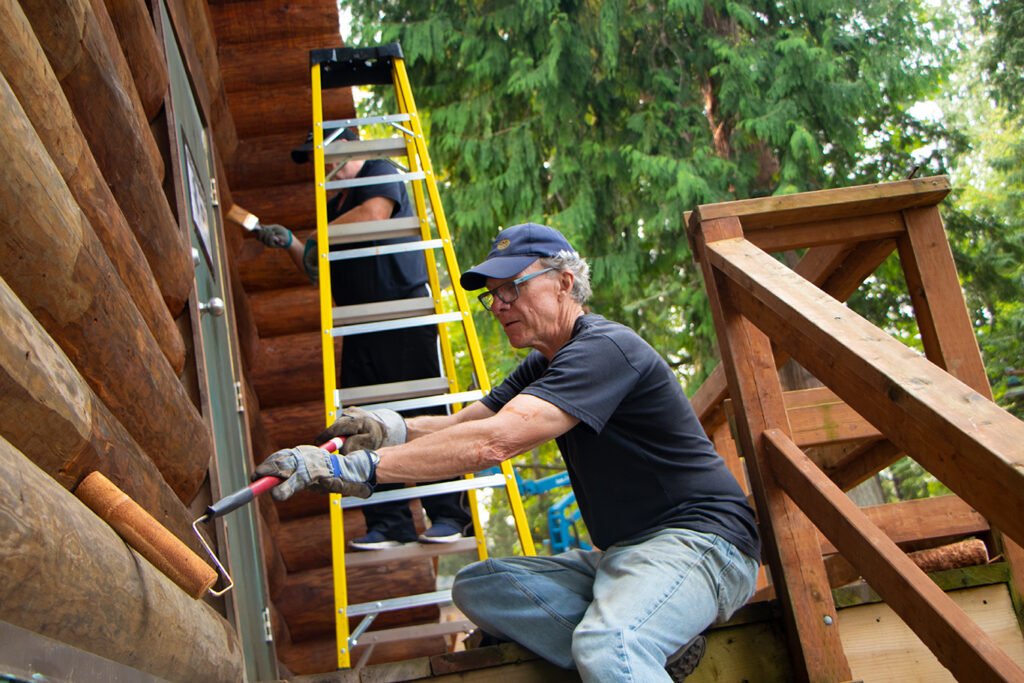
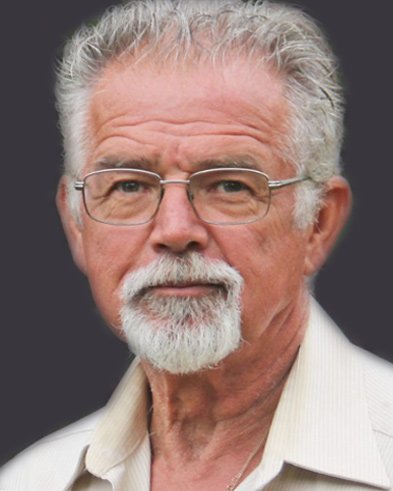
    Rotarians Tom Andrews and Bob Smith at work on the Waterwheel Park bandshell

    Members of the Chemainus Rotary Club have been hard at it, power washing, scraping and re-staining the log and wood trim exterior of the bandshell in Waterwheel Park. Rotarians Tom Andrews, Bob Smith and Richard Johnson were wielding brushes and rollers Wednesday afternoon, giving the main stage of the Chemainus Valley Cultural Arts Society a makeover. Others in the crew are Mike Beggs, Doc the Barber, Mark Staples and David McCormick.

    By the time they’ve applied the finishing touches, the club will have put in an estimated week-and-a-half on the project, just one of the many contributions it’s membership makes for the community. “There was tons of mold, and lichen, you name it, so we’ve power washed the building, now we’re painting and staining,” Smith said.

    They will also be refurbishing the benches in the amphitheatre area, a job that will require lots of elbow grease.

    The bandshell is just one of the structures and programs the Chemainus Rotary Club has supported over the years, and with their emblem on top of the stage, they want to make sure it stays in good shape, ready to use for years to come. The CVCAS manages the bandshell, and holds its Music in the Park series – and many other events – on its stage.

    Other Chemainus projects Rotary is engaged include a picnic shelter being constructed at Kin Beach Park and an outdoor shower, and the highly successful drive-in bottle collection fund-raiser, Saturdays from 10 AM to 2 PM on Chemainus Drive at Mill Street. They are also supporting the Nourish Cowichan project, which provides weekend packages for school children in the Cowichan Valley.

    That’s a shortlist, and with a membership of about 20, the Rotary is “spread kind of thin” with its long list of activities right now, Andrews said. You can find out more about what Rotary does and how to join on their website.

  • Weighing in on anchorages

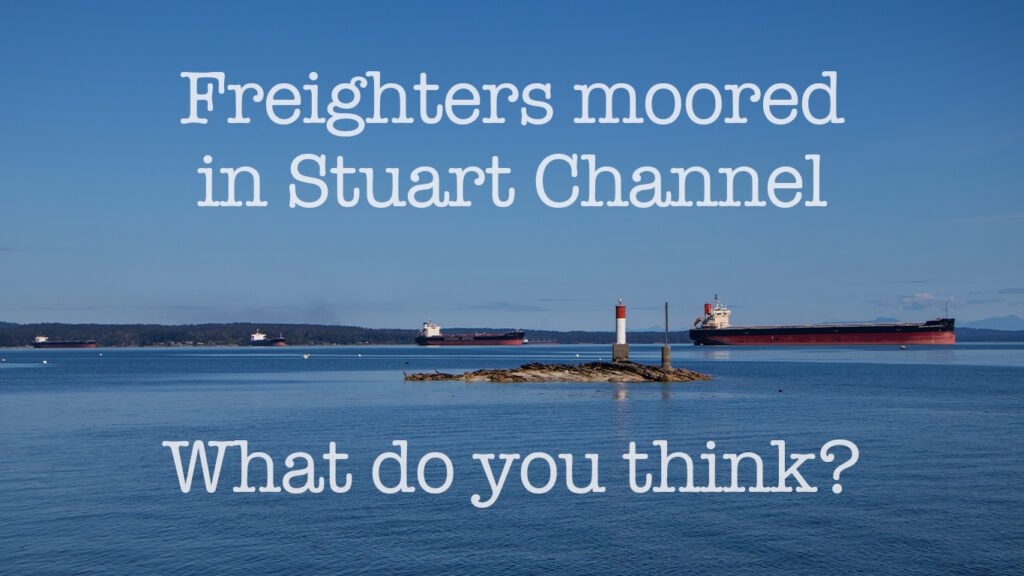
    If you count ’em there’s four freighters in the photo above, taken from Kin Beach Park. But the picture doesn’t tell the whole story, there were at least two more freighters visible from that vantage on the day the picture was taken, probably at least one or two more behind Bare Point and farther into Ladysmith Harbour.

    So how many is too many, when it comes to freighters mooring in Stuart Channel? Or is it okay, and a part of keeping Canada and B.C. connected to the global economy? What are the environmental risks of freighters in our waters? How well prepared are we to deal with those environmental risks?

    Are these questions we should be asking our local, provincial and federal representatives? What are the boundaries between jurisdictions? Is there a role for the Chemainus Residents’ Association when it comes to freighters off our favourite beach?

    We’d like to know what you think. So connect with us and share your thoughts. Or post a comment, and share them with our readers, too.

  • North Cowichan OCP Update

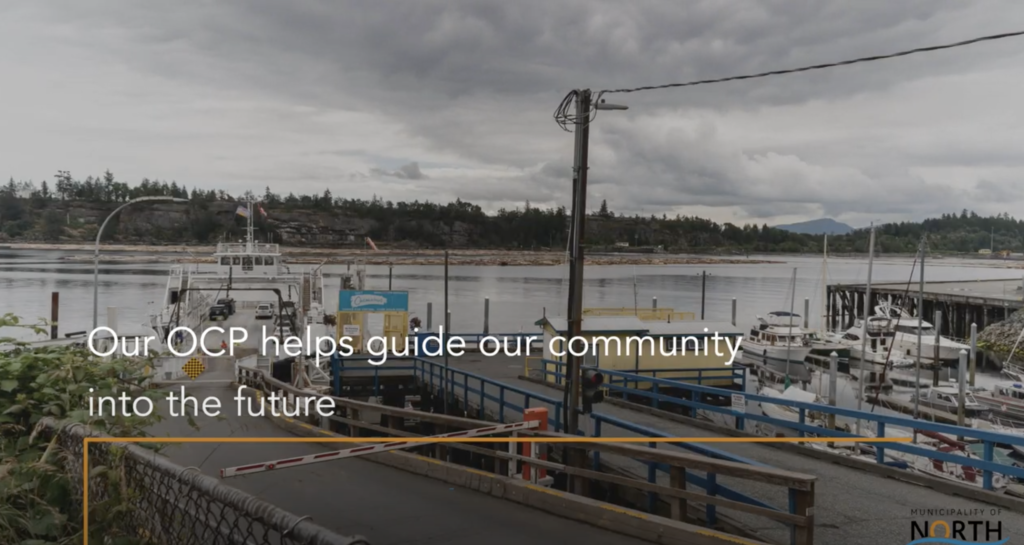
    A slide from North Cowichan’s video on its ThinkForward OCP Update page

    Now’s the time to share your views with the Municipality of North Cowichan, as it continues its Official Community Plan update. Until September 15 residents can complete an online Vision and Priorities Survey and make their preferences known.

    Most residents aren’t well versed when it comes to the purpose of an OCP. A Province of British Columbia ‘local government’ web page describes OCPs as: “statement(s) of objectives and policies that guide decisions on municipal and regional district planning and land use management. These decisions impact communities’ sustainability and resilience.”

    Says the introductory page to North Cowichan’s survey, “Your feedback on this survey will help shape a 20-year vision and develop priorities for North Cowichan to focus on so that we can achieve that vision together.

    “Coming to a common understanding about our collective community values will help us ‘ThinkForward’ as we move through this community-driven process.”

    Three questions posed in recent ThinkForward flyers distributed in the community are examples of the kinds of issues being addressed, and the importance of new possible directions to Chemainus:

    • In response to climate change would you rather: A) Accept that the climate is changing and ‘live with it”? B) Adjust by fire proofing homes, managing water supply and reducing greenhouse emissions?
    • Noting that the majority of housing built in North Cowichan over the last ten years has been stand alone (detached) houses, the municipality asks, should we: A) Continue to facilitate the development of residential subdivisions with detached houses that require you to own a car? B) Encourage different forms of housing such as apartments, townhouses, duplexes closer to shops and services?
    • One quarter of North Cowichan’t population is seniors, and that percentage is expected to grow in coming years. Should we adjust to this trend by: A) Building houses and community facilities better suited to seniors? B) Creating more housing options and economic opportunities to attract and retain young people and families with children?

    More information on the overall OCP process in North Cowichan is available on the municipalities ThinkForward webpage.

  • Air Quality Committee update

    Peter Ordynec is looking for people to join him on the CRA Air Quality Committee. Over the last few months there seems to have been a reduction in the number of days when residents of Chemainus have been troubled by odours emanating from the Coast Environmental waste disposal facility in the industrial area on the Trans-Canada Highway.

    But air quality concerns haven’t been resolved, and there’s still a need monitor developments on several fronts.

    Coast Environmental has had an application for an expansion approved by the province. They want to increase the amount of waste they are allowed to process from 12,000 to 18,000 tonnes per year. The Municipality of North Cowichan has appealed that decision. They point out that the Coast Environmental facility is a ‘grandfathered’ use in the industrial zone, and therefore should not be expanded.

    Organic Matter Recycling Regulations in B.C. are under review, one of the main proposals in the draft regulations being more stringent controls on odours. The CRA will be watching to see if those amendments come into effect.

    As part of its research into air quality in Chemainus, the committee conducted a survey of residents. A follow-up survey would help determine if residents feel air quality has changed since then.

    Monitoring and advocating for improved air quality is an important role for the CRA. If you want to help, contact Peter at pgo@shaw.ca.

    .